soniengg.com

Dough Laminator

Biscuit Dough Laminator

Cream crackers, puff biscuits, and Marie-type products get their characteristic texture from layered dough. Those layers don’t develop during baking. They’re built into the dough sheet before the oven, and the laminator is the machine that builds them. The process works through repetition. The dough sheet comes off the initial sheeter and enters the laminator, which folds it back on itself and re-sheets it. Each fold doubles the layer count. Three folds produce eight layers. Six folds produce sixty-four. The number of passes depends on the product type and the texture the recipe calls for. Manufacturers who don’t run laminated products don’t need this machine. Those who do can’t produce that product category without it. There’s no substitute process that replicates laminated dough texture.

Where It Fits in the Production Sequence

The laminator sits between the initial sheeter and the final gauge rollers. Dough arrives as a single sheet, passes through the lamination stages, and leaves as a multi-layered sheet ready for final gauging and cutting. This position makes the laminator optional on some lines and mandatory on others. A line running only moulded biscuits or rotary-cut soft products doesn’t require it. A line running crackers, puff-type biscuits, or layered digestive varieties is built around it. Getting the sequence right before commissioning matters because the laminator’s place in the layout determines how the machines upstream and downstream are spaced and connected. Machine width needs to align with the plant width of the rest of the line. Soni’s biscuit production equipment runs at 32 inches, and any laminator integrated into that setup needs to match that figure to feed cleanly into the downstream gauge rollers and cutter.

Frequently Asked Questions

01. Which biscuit types need lamination and which don't?

Lamination is required for products where a layered, flaky, or open texture is part of the specification: cream crackers, puff biscuits, certain Marie varieties, and digestive-type biscuits. Soft cookies, most rotary-moulded products, and standard hard dough biscuits cut on a rotary cutter don’t require it. If your production range covers both categories, the line layout needs to account for how non-laminated products move through without passing through a redundant lamination stage.

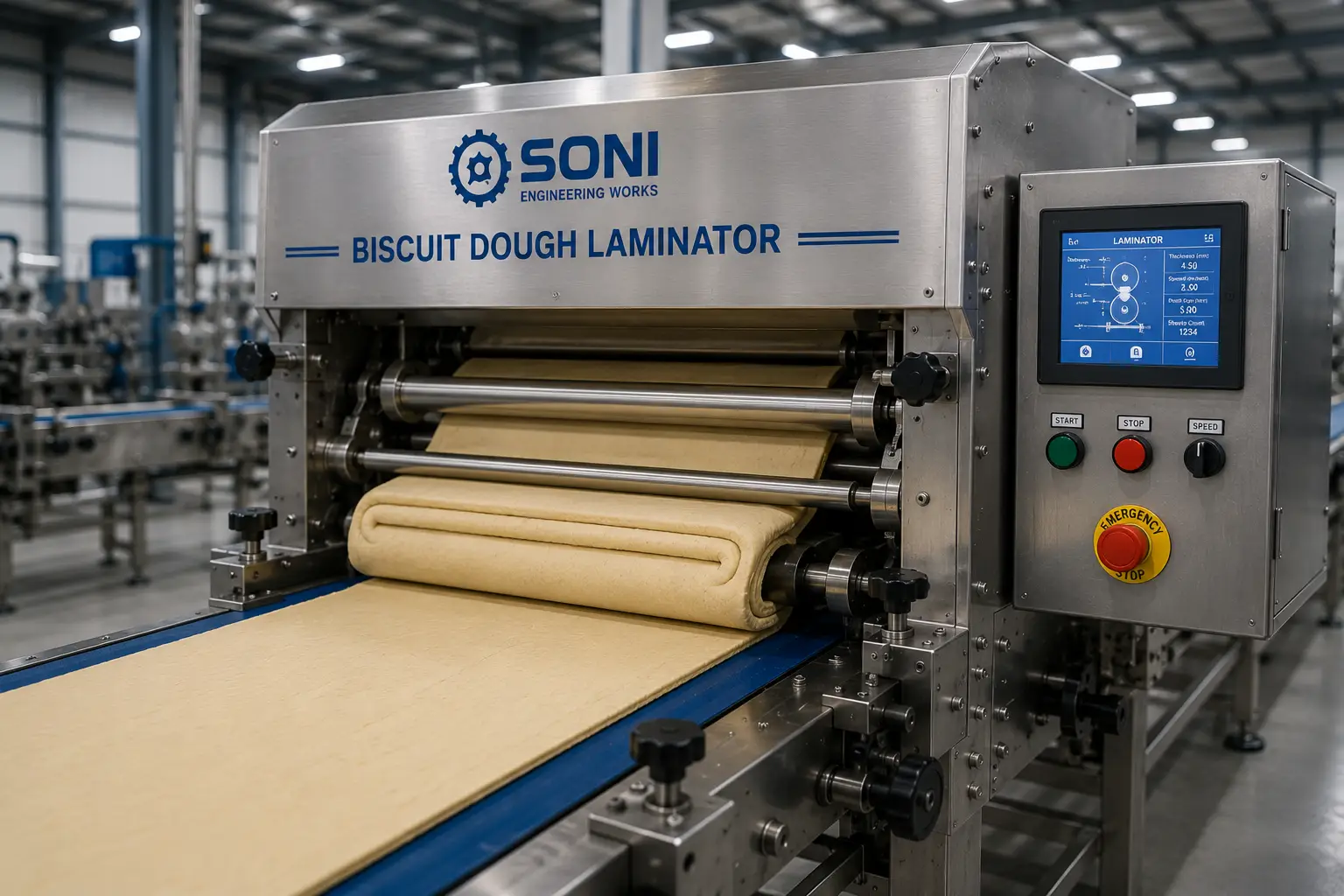
Every fold multiplies what’s already there. One fold takes a single sheet and creates two layers. The next fold takes two and produces four. After several passes, the sheet contains dozens of distinct layers at varying thickness. In the oven, steam trapped between those layers pushes them apart, creating the open structure that defines this product type. A dough sheet that hasn’t been through this process bakes as a single compressed mass regardless of oven time or temperature.

Three things determine the right specification: plant width, number of lamination stages your product range requires, and dough type. Most laminator configurations handle standard hard dough without issue. Sticky or high-fat formulations can create feeding problems depending on how the folding mechanism is set up. Bring your product list, current plant width, and the specific biscuit categories you plan to run. That gives enough information to confirm whether a standard build suits your line or whether the configuration needs adjusting.

Our Services

Have a
project in
mind?

Request Biscuit Plant Configuration