soniengg.com

Biscuit Dough Feeder

Biscuit Dough Feeder

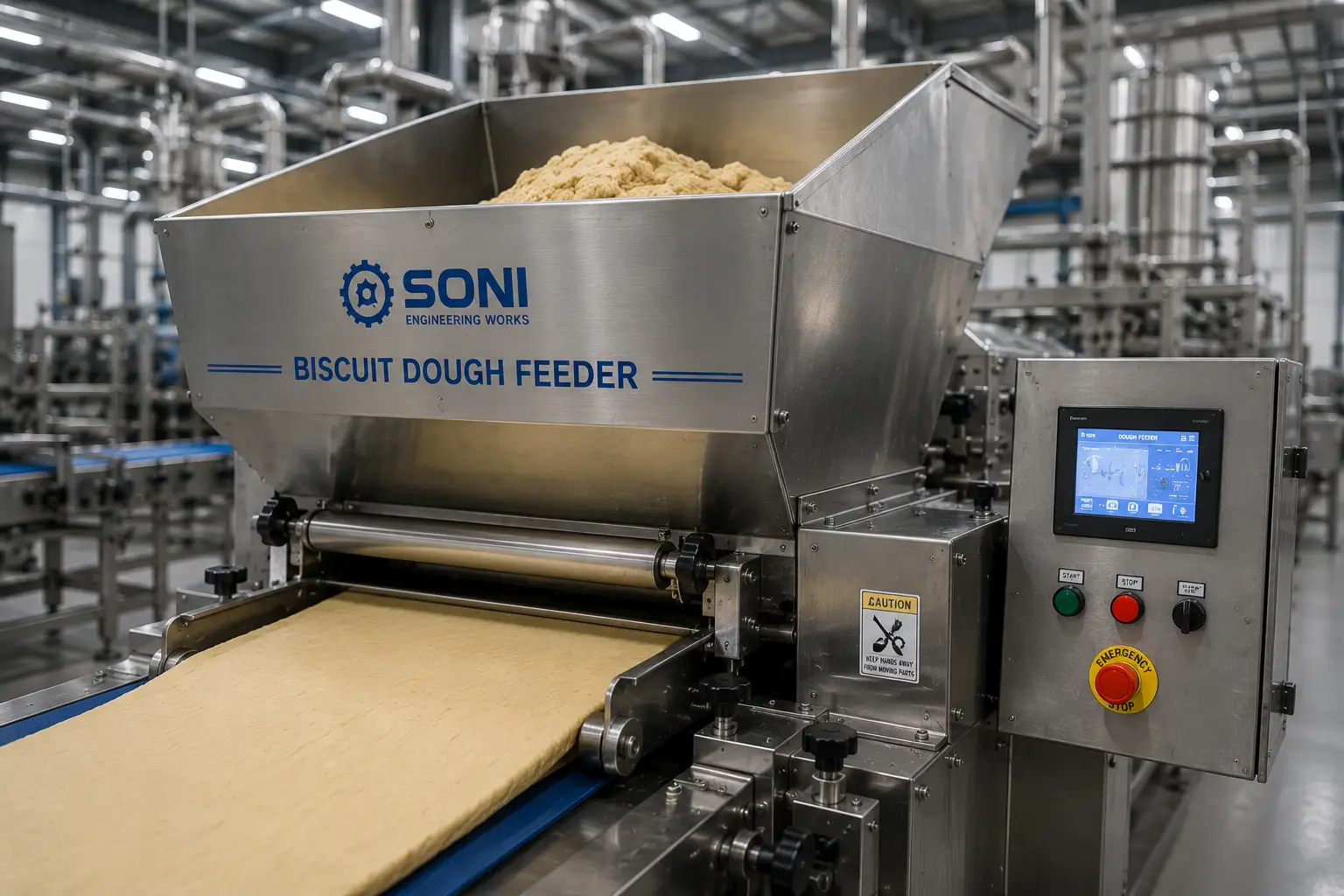
The sheeter doesn’t know if the dough arriving into it is too much or too little. It processes whatever comes. Feed it unevenly and the sheet thickness varies. Vary the sheet thickness and cut biscuit weight changes. Change cut biscuit weight and you’re either falling short of declared pack weight or giving away product on every batch. Both outcomes cost money. The dough feeder sits between the mixer and the sheeter. Its job is single and specific: deliver mixed dough into the sheeter at a consistent, controlled rate so the sheet forms at the correct thickness on every pass.

Its Role Between Mixing and Sheeting

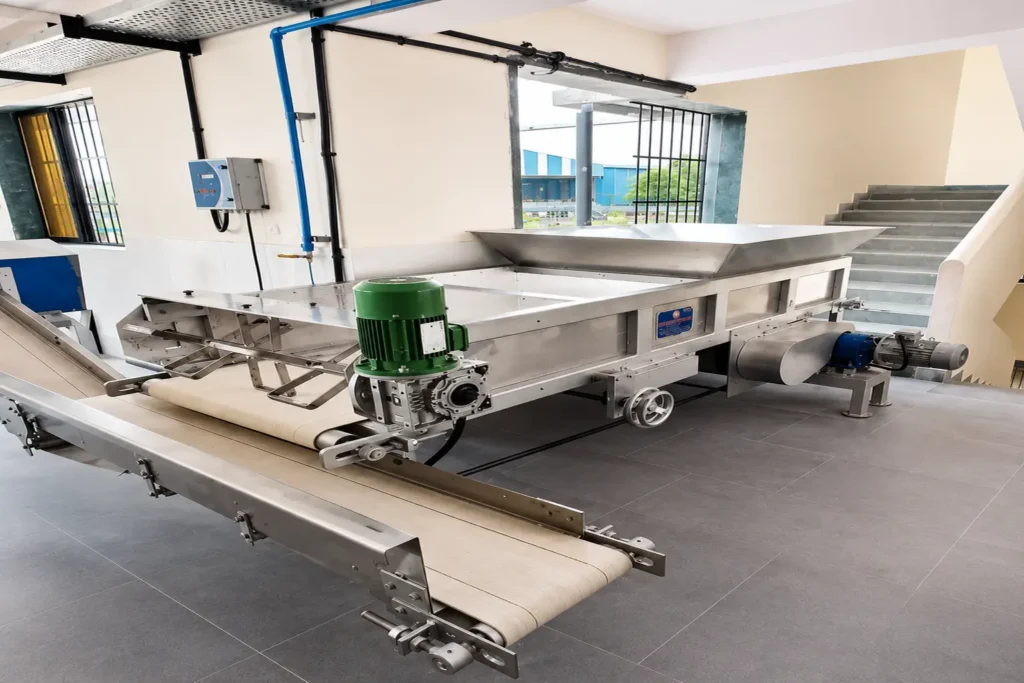
Dough comes out of the mixer in batches. The sheeter runs continuously. Those two rhythms don’t naturally match, and the feeder is what reconciles them. Without a dedicated feeder, operators load dough into the sheeter manually. That works until there’s a shift change, a pause, or a difference in how two people judge the right amount. Each variation enters the sheet, travels through the cutter, and reaches the oven. By the time it shows up as a weight check failure, tracing it back to the feed stage takes time the line doesn’t have. A calibrated dough feeder removes that variable. The rate stays consistent regardless of who is running the line. It also reduces the physical load on operators who would otherwise be lifting and positioning dough repeatedly across a full shift.

What to Confirm Before Ordering

Dough feeders are matched to the plant width of the production line. Soni’s biscuit line equipment runs at 32 inches, and the dough feeder needs to align with that figure to integrate correctly with the sheeter downstream. Feed rate requirements depend on what the sheeter draws and how fast your line runs. Hard dough and soft dough also behave differently through the feed mechanism, and some configurations need adjustment between the two. Bring your dough type, target output, and plant width to the conversation when enquiring. Reach out directly with your production setup and we’ll confirm the right specification.

Frequently Asked Questions

01. Where in the biscuit production line does the dough feeder sit?

It sits directly upstream of the sheeter. Mixed dough from the mixer goes into the feeder’s hopper. The feeder then delivers it into the sheeter at a set rate, which keeps the sheeter receiving a steady supply without manual intervention. This makes the dough feeder the transition point between batch production, which is what mixing is, and continuous production, which is what sheeting, cutting, and baking are.


Hard and soft dough differ in density and how they flow under feed pressure, which affects how the mechanism controls the rate. Whether a single feeder setup handles both without reconfiguration depends on the difference between your formulations. It’s a question worth putting to us directly before ordering, along with the specific dough types your line runs.

In the moment, a slightly uneven feed looks like a minor issue. Across a shift, it accumulates. Thicker sections of sheet produce heavier biscuits; thinner sections produce lighter ones. On a line with declared pack weights, the light biscuits create compliance risk and the heavy ones represent product given away for free. That loss is distributed across thousands of biscuits, which makes it invisible batch by batch and significant at the end of the month.

Our Services

Have a
project in
mind?

Request Biscuit Plant Configuration