soniengg.com

Packaging Conveyor

Packaging Conveyor

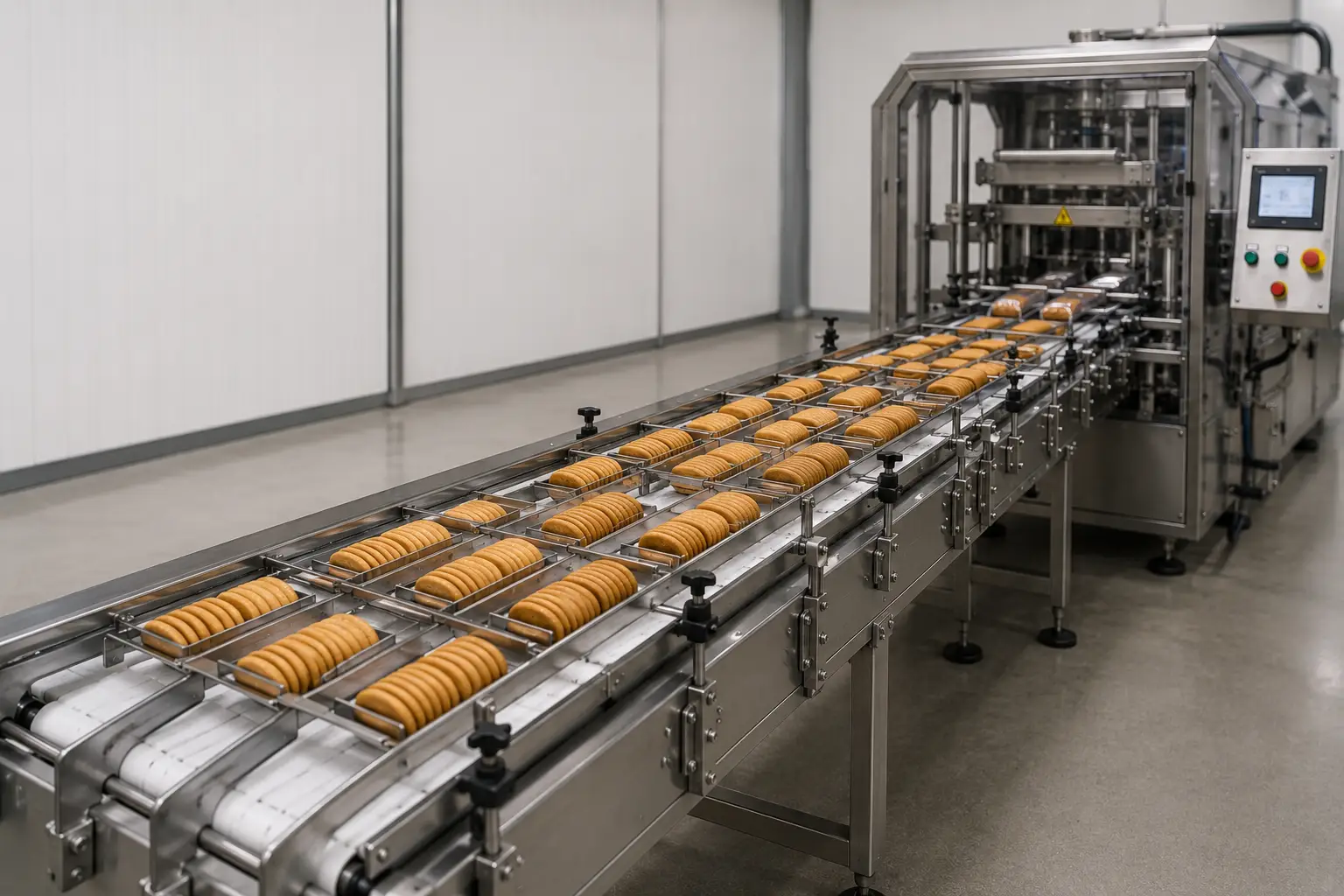
The packing machine doesn’t fail because of the packing machine. It fails because what feeds it isn’t consistent — biscuits arriving in the wrong orientation, at the wrong rate, in broken columns that jam the infeed. By the time the stoppage shows up on the line, the problem started twenty metres back. The packaging conveyor is where that problem either gets solved or gets ignored. Soni Engineering Works builds packaging conveyors as part of a connected post-baking section — not as standalone pieces of steel bolted between a stacker and a wrapper. The conveyor receives biscuits from the stacker output, controls their orientation, and feeds them into the primary packing machine at a rate the machine can actually use. Speed, lane width, and feed angle are configured before the line runs, matched to the packing format and the cycle rate of the specific packing machine downstream.

The Format Determines the Configuration

Slug pack and pile pack place opposite demands on the same conveyor. Slug pack feeds biscuits standing on edge in a tight column — the lane must be narrow, the biscuit control precise, and any wobble in orientation breaks the slug before it reaches the wrapper. Pile pack feeds flat-stacked groups — the stacking height must be consistent, and the transfer from stacker to conveyor can’t disturb the count. Family pack and canteen pack sit between these two extremes, each with its own lane geometry and feed rate requirements. The configuration Soni Engineering Works applies depends on which format the line runs. If the operation switches between formats — say, slug pack on a morning run and family pack in the afternoon — the conveyor setup is reviewed at the time of installation to establish what changeover looks like in practice, and whether mechanical adjustment is needed or whether speed and lane settings alone are enough. That conversation happens before the line is built. Not after the first changeover stoppage.

Where Integration Matters More Than the Machine Itself

The packaging conveyor Soni Engineering Works supplies operates at 220–415V, 50Hz, automatic grade. Those specifications tell a buyer what the machine is. They don’t tell a buyer whether the line will run without stoppages at three hundred kilograms per hour on a Tuesday afternoon when the stacker is running at its upper limit. That depends on whether the conveyor speed, the stacker discharge rate, and the packing machine cycle rate have been set up as a system — or as three separate machines sitting next to each other. Soni Engineering Works supplies the complete post-baking section: cooling conveyor, stacker, packaging table conveyor, and primary packing machine. The section is configured as a matched sequence. Feed rates are set together. Lane widths are measured against actual biscuit dimensions, not nominal ones. The packing machine doesn’t receive what the conveyor happens to send — it receives what it was designed to accept. For high-output automatic lines, this matters in a way that becomes obvious the first time it isn’t done.

Frequently Asked Questions

01. What does the packaging conveyor actually control, and why does it affect packing machine performance?

The conveyor controls two things: biscuit orientation and feed rate. A packing machine running slug pack needs biscuits arriving on edge, in an unbroken column, at a rate that matches its wrapping cycle. If orientation is inconsistent — biscuits arriving flat, or rotating mid-conveyor — the infeed jams. If feed rate is too high, biscuits stack up at the infeed and break. Too low, and the machine runs air gaps into the pack. The conveyor isn’t a passive transfer mechanism. It’s the interface between the stacker and the wrapper, and how it’s configured determines whether those two machines can actually run together.


It depends on how different the formats are. Switching between slug pack and pile pack requires a lane geometry change — those two formats place different physical demands on the infeed. Switching between slug pack and canteen pack may require only speed and tension adjustments. At the time of installation, Soni Engineering Works reviews the formats the line needs to run and configures the conveyor accordingly, including what changeover involves and how long it takes.

Both. The packaging conveyor can be added to an existing post-baking section where the current feed arrangement is causing stoppages or breakage at the packing machine infeed. In that case, the existing stacker output and packing machine infeed are measured before the conveyor is sized, so the replacement is matched to what’s already there rather than to a nominal specification.

Our Services

Have a
project in
mind?

Request Biscuit Plant Configuration